


In the Trump immunity case, the court will likely wrestle with separation of powers, ‘official acts,’ and how curbing immunity could affect decision-making.
By Sam Dorman|
March 19, 2024
Updated:March 19, 2024
The Supreme Court has set April 25 to hear oral arguments in former President Donald Trump’s appeal that he should be immune from criminal prosecution in his Washington trial.
In taking up the case, the top court will look at questions about what exactly presidential immunity covers and how it should affect the nation’s separation of powers in future administrations.
Prior cases haven’t definitively established whether presidents enjoy immunity from prosecution over alleged criminal acts. Instead, the court has historically upheld a level of presidential independence and ruled in the 1982 decision of Nixon v. Fitzgerald that a president enjoys absolute immunity from civil liability for acts that fall within the “outer perimeter” of his official duties.
President Trump has argued that immunity should extend to alleged criminal acts. Special counsel Jack Smith and the U.S. Court of Appeals for the District of Columbia Circuit were concerned, however, that widening the scope of immunity that far would undermine the separation of powers and allow presidents to get away with egregious wrongdoing.
The circuit court ultimately rejected President Trump’s immunity request in a unanimous decision.
Embedded in these broader debates is a series of questions about the Constitution, its history, and the relationship between the executive and judicial branches. Below are five key questions that have arisen in legal briefs and that the Supreme Court might consider.
1. Part of Official Duties?
The core of Mr. Smith’s prosecution, on behalf of the Department of Justice, rests on President Trump’s activities leading up to and on Jan. 6, 2021, as well as whether his actions constituted attempts to defraud the United States.
More specifically, Mr. Smith’s indictment alleges that President Trump attempted to fraudulently forestall congressional proceedings on Jan. 6, 2021, through the vice president, his advisors, and false electors.
President Trump has denied wrongdoing but also maintained that all of the indicted actions alleged fell within the scope of his official acts, making them immune from prosecution. In his original motion to dismiss, President Trump described his indicted actions as, among other things, part of his duties to ensure election integrity. His motion states that the nature of an act, not President Trump’s motives, should determine whether it’s covered by immunity.
Premium Picks

After a Pause, Jan. 6 Arrests Are Now Sharply Increasing
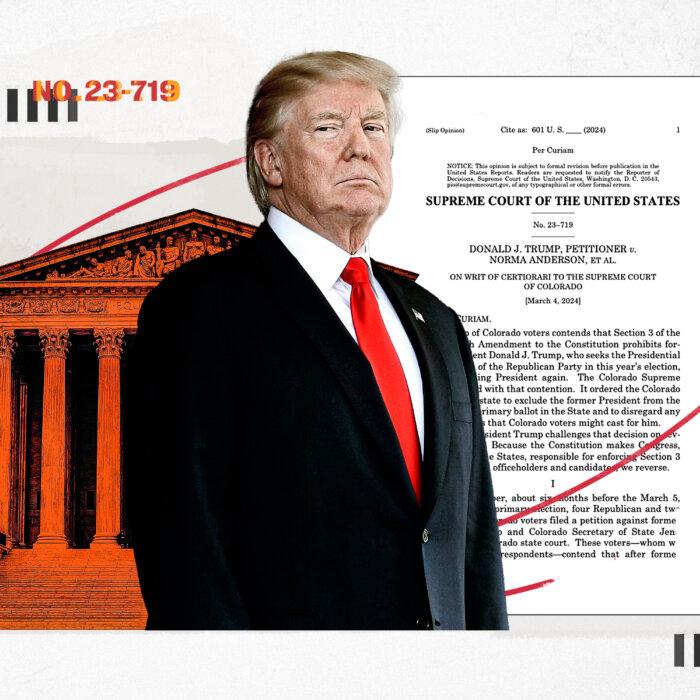
Key Takeaways From Supreme Court Trump Ballot Ruling
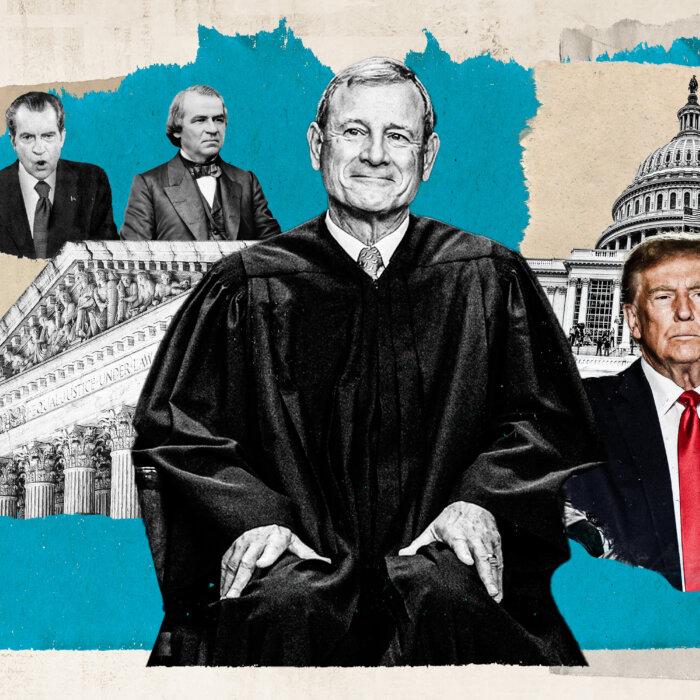
Supreme Court Could Set Landmark Precedent in Trump Jan. 6 Case
“The indictment charges President Trump with five types of conduct, all constituting official acts of the President,” his petition to the Supreme Court reads.
The term “official” is important because of what the court held in Nixon v. Fitzgerald, perhaps the most important precedent in this area. That ruling applied to civil immunity. How far the perimeter referenced by Nixon v. Fitzgerald extends has been questioned, as has whether that immunity applies to purportedly criminal actions.
In taking this case, the Supreme Court appears poised to issue a historic precedent. It decided to tackle the issue head-on by asking “whether and if so to what extent does a former President enjoy presidential immunity from criminal prosecution for conduct alleged to involve official acts during his tenure in office.”
When she assessed President Trump’s immunity claims, District Judge Tanya Chutkan assumed that the allegations in Mr. Smith’s indictment were true and focused instead on whether the law theoretically protects presidents from criminal prosecution. She nonetheless included an analysis of the indictment’s allegations while arguing that, official or not, criminal acts aren’t protected under presidential immunity.

Like Judge Chutkan, the Supreme Court justices might discuss the nature of the alleged actions to weigh the implications of granting immunity to President Trump and his successors.
The substance of President Trump’s activities has been disputed, with some attorneys telling The Epoch Times that at least some of his conduct fell outside of his official duties.
They had nothing to do with his duties as president,” former Assistant U.S. Attorney Kevin O’Brien told The Epoch Times. He said that if the activities were “relevant to the campaign, then he’s in no different position than any other candidate who’s campaigning.”
The appellate hearing in January raised questions about how far presidents could go without facing prosecution. Court of Appeals Judge Florence Pan notably asked President Trump’s attorney D. John Sauer whether a president could avoid criminal prosecution for selling pardons or ordering SEAL Team Six to assassinate a political rival, for example. Mr. Sauer said he could only be prosecuted for the assassination if Congress had first impeached and convicted him for it.
Constitutional attorney Gayle Trotter told The Epoch Times that Judge Pan had raised “extreme” hypotheticals that don’t necessarily have to factor in courts’ decisions. “Those types of extreme examples, I believe, are really for pushing the envelope [and] rhetorical flourish,” she said.
She speculated that Supreme Court justices wouldn’t take those types of examples “into account.”
2. Presidential Decision-Making
President Trump, now the presumptive Republican nominee, could return to the White House in 2025. Even if he doesn’t win in November, his case will likely bear on legal and executive decision-making in future administrations.
The bases for protecting presidential immunity are varied but include concerns about chief executives being able to exercise discretion without undue impediments. That concern will likely play a role in how the justices craft whatever standard they potentially create in resolving President Trump’s case.
Department of Justice memos in 1973 and 2000 both oppose indicting or criminally prosecuting a sitting president as it would “impermissibly undermine the capacity of the executive branch to perform its constitutionally assigned functions.” Those memos aren’t binding on the court but could nonetheless help inform the justices’ opinions.
3. How Much Can Courts Review?
Presidential immunity has historically been understood as an integral part of the separation of powers between the three branches of government. For practical and constitutional reasons, judges have resisted the idea that presidents can be tried for certain actions in the courts established under Article 3 of the Constitution.
Much of the legal discussion in President Trump’s case has focused on the Supreme Court’s landmark 1803 decision in Marbury v. Madison, which broadly established judicial review but maintained certain limits on the review of particular presidential acts.
4. What Does the Constitution Say?
In short, the Constitution doesn’t say much about presidential immunity. Courts have instead had to indirectly glean understandings of immunity and separation of powers from the text. While there is no explicit constitutional guarantee to presidential immunity, two clauses—known as the vesting clause and the take care clause—feature prominently in the debate over immunity’s scope.
Presidents derive their authority from Article 2 of the Constitution, which “vest[s]” the executive power in the president and provides that he will “take Care that the Laws be faithfully executed.”
In the circuit court, the appellate judges argued that President Trump’s position contravened his duties under Article 2. “It would be a striking paradox if the President, who alone is vested with the constitutional duty to ‘take Care that the Laws be faithfully executed,’ were the sole officer capable of defying those laws with impunity,” their opinion read.
President Trump, however, indicated that in allowing Article 3 review, courts would be violating the vesting clause and separation of powers. “For another branch to arrogate the ‘executive Power’ to itself, or to purport to dictate how the President must exercise that authority, is a core violation of the separation of powers,” his petition to the Supreme Court read.
5. Impact on Judiciary Credibility
Hanging over the court is the specter of potential reforms and political backlash, as was observed after the 2022 decision in Dobbs, which overturned Roe v. Wade.
President Joe Biden seemed to raise the stakes during his March 7 State of the Union address when he targeted the justices and suggested voters would respond in some way to their decision.Please read more details at the below link:
https://freedom-vaca.org/vaca-blog-tieng-viet-nam/
https://freedom-vaca.org/vaca-main-blog-english-articles/
Sent with Proton Mail secure email.